
Introduction: The Changing Face of Modern Construction
Building a home or commercial property is a monumental milestone. It is an intricate journey of transforming an architectural vision into a structural reality that feels safe, looks exceptional, and stands resilient for generations. However, developers and individual builders often find themselves caught in a challenging balancing act: how do you achieve uncompromising structural integrity while keeping skyrocketing material and labor costs under control?
In highly dynamic urban landscapes, environmental demands, logistical hurdles, and tight budgetary constraints constantly test the feasibility of construction projects. Traditional clay bricks, while historically reliable, frequently fall short when it comes to speed of execution, thermal efficiency, and cost-effectiveness.
Enter the modern game-changer: cement blocks.
Far from being mere pieces of compressed concrete, advanced cement blocks are reshaping the structural landscape of modern architecture. From towering commercial hubs to sustainable family homes, these engineering marvels offer an optimized blend of durability, design flexibility, and fiscal relief. Whether you are partnering with the Best construction companies in Bangalore or managing your own structural layout, understanding the distinct profiles, applications, and financial advantages of cement blocks is the key to unlocking a future-proof asset.
In this exhaustive guide, we will break down the primary types of cement blocks, explore their versatile engineering applications, and analyze how making the switch can save you up to 15% on your total construction budget.
1. What Are Cement Blocks? (An Overview)
At its core, a cement block—often referred to as a concrete masonry unit (CMU)—is a precast structural component manufactured from a precise mixture of Portland cement, graded sand, gravel, and water. Unlike traditional clay bricks that depend on extensive topsoil excavation and energy-intensive kiln baking, cement blocks are molded and cured under meticulously controlled industrial conditions.
This standardized manufacturing process yields exceptional uniformity in size, shape, and density. To further elevate the environmental and structural profile of these units, top-tier manufacturers frequently incorporate industrial by-products like fly ash. This specialized addition alters the micro-structural matrix of the block, minimizing porosity while substantially reducing the carbon footprint of production.
From a global perspective, the shift toward concrete masonry is massive. The global concrete block and brick manufacturing market size is projected to scale from USD 955.5 Billion to a staggering USD 1,529.0 Billion, expanding at a steady CAGR of 4.8%. This macro-economic transition underscores a fundamental reality: modern infrastructure demands materials that are structurally superior, highly scalable, and structurally optimized for rapid assembly.
2. Solid vs. Hollow vs. Cellular: Understanding the Core Types
Not all construction zones share the same load profiles or environmental stresses. To maximize performance, engineers segment cement blocks into three primary structural classifications: Solid Blocks, Hollow Blocks, and Cellular Blocks. Selecting the correct typology is vital for balance, weight distribution, and functional efficiency.
+-----------------------------------------------------------------+
|                      CEMENT BLOCK TYPES                         |
+--------------------------+--------------------------------------+
| 1. SOLID BLOCKS          | High density, heavy load-bearing     |
+--------------------------+--------------------------------------+
| 2. HOLLOW BLOCKS         | Dual voids, lightweight, insulating  |
+--------------------------+--------------------------------------+
| 3. CELLULAR BLOCKS       | Air-entrained, ultra-light, acoustic |
+--------------------------+--------------------------------------+
Solid Blocks
Solid cement blocks are high-density, heavyweight units engineered to withstand immense compressive forces. They contain minimal to no voids, ensuring that the entire volume of the block contributes directly to its load-bearing capacity.
- Engineering Profiles: Typically feature a high characteristic compressive resistance, making them ideal for heavy load distribution.
- Primary Structural Uses: Load-bearing external walls, foundational footings, retaining structures, basements, and high-security perimeter walls.
- Key Advantage: Exceptional structural mass providing unmatched resistance to physical impact, seismic forces, and lateral earth pressures.
Hollow Blocks
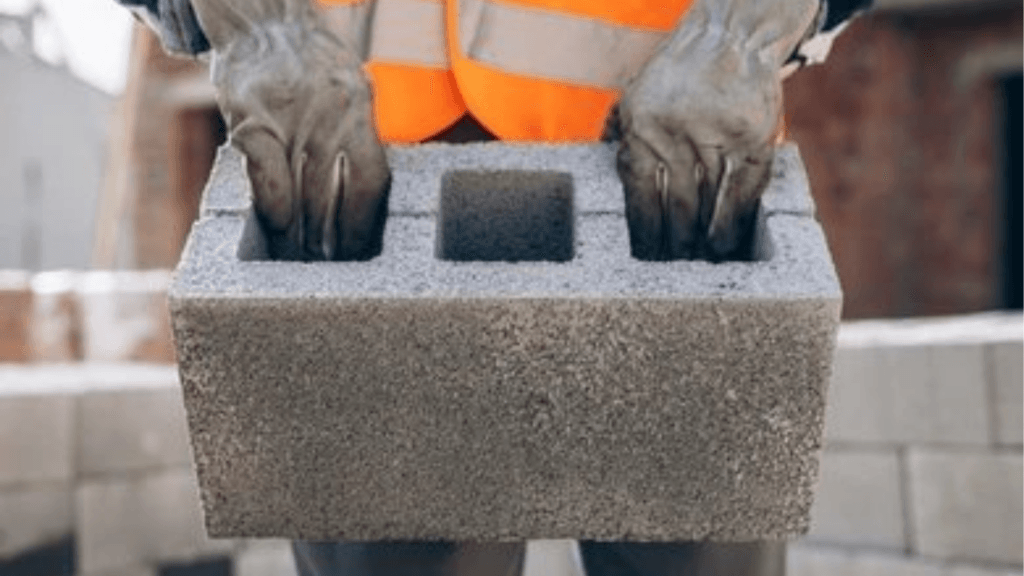
Hollow cement blocks feature one or more engineered inner cores or voids that reduce the overall weight of the block without compromising its structural perimeter. The total volume of the cores generally ranges from 25% to 50% of the gross cross-sectional area.
- Engineering Profiles: Designed with thick shell walls and interior webs that maintain excellent vertical load pathways while creating stagnant air chambers.
- Primary Structural Uses: Multi-story frame infill walls, internal partition walls, non-load-bearing facades, and boundary structures.
- Key Advantage: Significant dead-weight reduction for the building frame, coupled with natural thermal and acoustic insulation barriers provided by the hollow chambers.
Cellular Blocks
Cellular blocks (often overlapping with light-weight aerated blocks) are produced by trapping microscopic, non-connected air bubbles throughout the concrete mixture, or by creating deeply recessed single-ended cavities within the block.
- Engineering Profiles: Low-density blocks characterized by a highly porous internal structure that dramatically minimizes mass while retaining a stable external face.
- Primary Structural Uses: Lightweight internal partitioning, high-rise architectural adjustments where dead load must be minimized, and spaces requiring strict acoustic isolation.
- Key Advantage: Unparalleled ease of cutting, drilling, and shaping on-site, alongside superb thermal resistance properties.
3. Key Structural and Architectural Uses
The absolute uniformity and structural versatility of concrete blocks make them an architectural favorite across residential, commercial, and industrial ecosystems. When executing blueprints with top construction companies in bangalore, you will find concrete masonry integrated into several key structural areas:
Load-Bearing External Masonry
For low-to-medium rise structures, solid cement blocks completely eliminate the need for costly reinforced concrete columns and beams. The blocks themselves absorb and safely transfer the dead loads of roofs and upper floors directly down to the foundations, significantly optimizing material workflows.
High-Rise Non-Structural Infill
In RCC (Reinforced Concrete Frame) skyscrapers, hollow and cellular blocks serve as the perfect infill material. Because the structural load is entirely handled by a concrete skeleton, these lighter blocks fill the exterior voids, preventing structural overload on lower levels while creating a smooth facade for exterior rendering.
Subterranean Foundations and Retaining Walls
Due to their superior resistance to groundwater penetration and lateral earth pressures, solid cement blocks are highly preferred for building robust basement walls, drainage culverts, step-foundations, and landscaping retaining systems.
Thermal and Acoustic Enclosures
Spaces that demand quiet environments or precise climate control—such as auditoriums, commercial workspaces, schools, and modern family residential complexes—leverage the natural air-pockets inside hollow concrete walls to block ambient street noise and stabilize interior temperatures.
4. Cost-Saving Benefits: How Cement Blocks Protect Your Budget
Financial efficiency in construction is achieved by selecting smart materials that reduce labor, accelerate timelines, and minimize raw material waste. Cement blocks excel in these exact areas, delivering a documented 15% savings on overall structural masonry budgets.
1. Drastic Reduction in Labor Hours
Because a standard concrete block is significantly larger than a traditional clay brick, a mason can cover a much greater surface area in a single motion. The exceptional dimensional alignment of the units eliminates the need for constant, time-consuming manual leveling and trimming. On average, switching to cement blocks accelerates wall construction timelines by 20%, directly cutting down on cumulative daily labor wages.
2. Massive Mortar Optimization
Traditional brickwork features dozens of irregular joints per square meter, requiring deep layers of wet mortar to patch up variations. The large-format nature and crisp, straight edges of cement blocks vastly reduce the total volume of joint lines. This optimization translates to a 30% to 40% reduction in mortar usage, dramatically cutting down on sand and Portland cement material costs on the construction floor.
3. Lower Structural Weight (Reduced Steel Requirements)
By strategically using hollow and cellular blocks for internal partitions and non-load-bearing infills, structural engineers can significantly decrease the total dead weight of the entire superstructure. A lighter building requires less heavy steel rebar reinforcement and smaller concrete foundations to remain perfectly stable, unlocking cascading cost reductions across the early procurement phases of your project.
4. Plastering and Finishing Economies
Clay brick walls are notoriously wavy and irregular, requiring thick, multi-layered coats of internal cement plaster to achieve a perfectly flat finish. Concrete blocks offer clean, flat faces right out of the mold. Masons only need to apply a thin, smooth skin coat of plaster before moving straight to priming and painting, keeping finishing material expenses to an absolute minimum.
5. Case Study: Successful Use of Cement Blocks in a Bangalore Residential Project
To truly appreciate the practical, real-world impact of advanced concrete masonry, let us analyze a detailed residential case study executed in South Bangalore.
Project Parameters
- Plot Footprint: 2,400 Square Feet
- Client Vision: A modern, sustainable, low-maintenance multi-generational family home maximizing light and eco-efficiency.
- The Engineering Challenge: The project was bound to a strict financial budget and faced an unpredictable weather window spanning from intense, blistering summer heat waves to torrential monsoon seasons.
The Material Strategy
Initial architectural calculations showed that relying entirely on traditional clay bricks would push the timeline deep into the heavy monsoon season, creating cost overruns. The strategy was pivoted to a highly specialized concrete block masonry plan:
- Main Structural Envelope: Solid blocks were specified for the primary external perimeter walls to guarantee high compressive security and total resistance to heavy water saturation.
- Internal Partitions: Hollow blocks were selected for all interior room dividers to minimize structural dead loads, conceal conduit lines, and establish thermal zoning.
- Procurement Quality Control: All masonry units were sourced directly from specialized regional manufacturers adhering to strict Indian Standard (IS) quality benchmarks.
Measurable Project Outcomes
The execution phase yielded immediate, undeniable advantages across all core operational sectors:
- Velocity of Execution: Stacking and aligning the large-format units was exceptionally straightforward. On-site audits confirmed that the structural masonry walls were completed 20% faster than standard brick alternatives, allowing the project to wrap up safely before the monsoon broke.
- Direct Material Savings: The precise structural symmetry of the blocks minimized joint gaps, requiring far less mortar. Furthermore, the completely flat surfaces required only a thin layer of plaster finish.
- Total Budget Reduction: When compiling final accounts, the client recorded a clean 15% total budget savings across materials, structural steel adjustments, and labor wages.
- Post-Occupancy Performance: Two years post-handover, the structure shows zero hairline cracks or water dampness despite weathering intense monsoons. Additionally, the stagnant air gaps inside the hollow block walls act as a natural shield, keeping the home interior cool and significantly lowering monthly electricity bills.
6. Environmental and Long-Term Performance Benefits
Beyond direct financial savings on day one, concrete blocks act as a long-term sustainability asset, protecting properties against environmental weathering and wear.
Exceptional Weather Resistance and Structural Integrity
Bangalore’s climate can fluctuate dramatically from heavy monsoon downpours to intense heat waves. Clay bricks are naturally prone to absorbing moisture over time, which often leads to structural dampness, peeling paint, and interior mold growth. Cement blocks maintain an extremely low water absorption rate, preventing water tracking and remaining structurally sound without showing any signs of cracking or deterioration over decades.
Advanced Thermal Regulation and Energy Efficiency
The hollow spaces built into modern concrete blocks create highly effective thermal buffers. These air pockets slow down the rate of heat transfer from the outside world into your living space during hot summer afternoons. Conversely, they trap interior warmth during cooler winter nights. This continuous, natural thermal optimization stabilizes internal room temperatures and reduces your reliance on air conditioning systems, dropping your long-term energy footprint.
Fire Resistance and Structural Safety
Concrete is naturally non-combustible and has a highly resilient fire-resistance rating. A properly constructed concrete block wall can withstand intense fire exposures for several hours without losing its structural load-bearing capacity, providing a vital safety barrier that protects human life and property assets far better than wood frame or thin drywall partitions.
True Sustainable Building Practices
Modern concrete blocks are at the forefront of green building technology. Because they utilize industrial by-products like fly ash, they prevent millions of tons of waste from entering landfills while actively protecting precious agricultural topsoil from destructive brick-mining practices. Furthermore, the longevity and zero-maintenance nature of concrete masonry mean that no material waste is generated through future repairs or building restoration cycles.
7. Concrete Mix Design and Technical Quality Assurance
To ensure that your cement blocks achieve maximum structural performance on the job site, you must pay close attention to the raw concrete mix proportions and scientific quality assurance testing protocols.
M-15 and Custom Concrete Proportions
High-performance concrete block production relies on standardized engineering mix designs, such as M-15 concrete, mixed in accordance with IS 10262 guidelines. A standard proportion ledger outlines the following technical properties:
- Grade Designation: M15
- Cement Type: Ordinary Portland Cement (OPC) 53 Grade
- Maximum Nominal Aggregate Size: 20 mm crushed angular aggregate
- Minimum Cement Content: 250 kg/m³
- Maximum Water-Cement Ratio: 0.5
- Target Workability: 25 mm slump
For specialized mortar settings (plastering and unit laying), specific cement-to-sand volumetric ratios must be meticulously maintained on-site:
| Serial No. | Construction Work Typology | Recommended Cement : Sand Ratio |
|---|---|---|
| 1 | Standard Load-Bearing Unit Masonry | 1:6 to 1:8 |
| 2 | Heavy Masonry Plastering Applications | 1:3 to 1:4 |
| 3 | Structural Concrete Plastering Skin Coats | 1:3 |
| 4 | Fine Pointing and Joint Refinements | 1:2 to 1:3 |
Laboratory Compressive Strength Performance
Before any batch of concrete blocks is cleared for heavy load placement, samples must undergo thorough destructive compression tests at 7-day and 14-day curing intervals to map their true load-bearing capacities. Historical compression testing metrics demonstrate a clear, predictable strength curve:
Compressive Strength Development (MPa)
  25 +-------------------------------------------------------+
     |                                                       |
  20 |                                       * [20.8 MPa]    |
     |                         * [14.7 MPa]                  |
  15 |           * [12.3 MPa]                                |
     |                                                       |
  10 |                                                       |
     +-------------------------------------------------------+
               7 Days                 14 Days                 28 Days
Engineering diagnostics reveal that block pavements continuously stiffen over time when exposed to initial traffic weight cycles, eventually reaching full, stable elastic performance. The vertical surface area of the specific block shape dictates the total load distribution efficiency, with customized interlocking shapes consistently outperforming standard rectangular configurations under intense heavy vehicle use.
Conclusion & Call to Action
Choosing the right structural materials is the most important decision you will make for your project’s longevity and financial health. Cement blocks provide a superior alternative to traditional masonry, offering an optimized balance of strength, rapid build times, and structural insulation. By integrating these engineered components into your construction plan, you can fast-track your execution schedule by 20%, lower structural dead weights, and cut your total building budget by 15%.
At Artscape Developers, we design and construct premium spaces built to last. Our engineering teams utilize state-of-the-art materials, automated quality controls, and advanced concrete masonry practices to deliver world-class homes and commercial properties across the region. Don’t leave your structural safety or project budget to chance. Reach out to our technical advisory team today to review your structural blueprints, calculate your material requirements, and build your next dream project on an unbreakable foundation.
Are you ready to build a strong, cost-effective, and future-proof project? Contact Artscape Developers today to speak directly with our senior structural consultants and watch your vision come to life!