

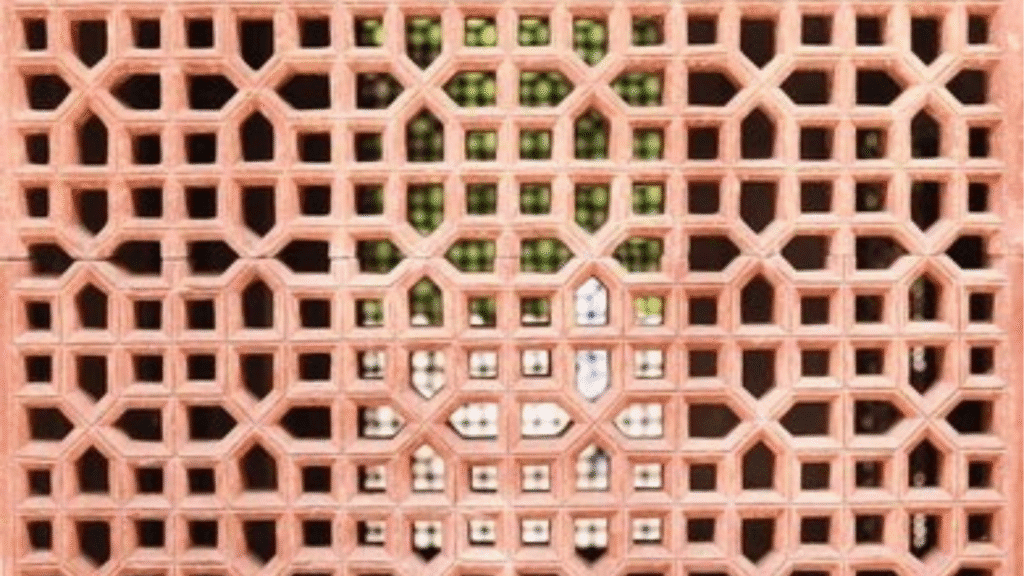
The brick jali has been around for a while. There are wonderful examples of jali architecture all around India and the Middle East that are hundreds of years old. These architects weren’t only designing nice patterns; they were also handling hard climate problems without using air conditioning. They knew something that many modern builders ignore.
Natural Climate Control Rules
A solid wall gets hot. It keeps heat in and makes your air conditioner work harder. A brick jali wall does the opposite.
Air Flow: The microscopic holes in the jali brick let air flow through all the time. This cross-ventilation cools the area behind the wall right away by leveraging the simple idea of air moving naturally.
Shading: The bricks are thick, which makes deep pockets of shade. The brick jali shape keeps direct sunshine out but lets in cool, soft light. This keeps your inside from getting too hot.
Evaporative Cooling: When air moves over the porous surface of the brick, any moisture in the air cools it down a little bit. This makes the brick jali one of the most sustainable cooling options known today.
This feature means that the house you’re building will attempt to keep itself cool. That means big savings on your monthly energy bills.
Finding the Right Fit: Looking at Different Jali Types and Patterns
The design is the most important thing that changes about a brick jali. There are a lot of different kinds of jali, but most of them fit into one of two groups.
1. Easy to Stack Patterns
This uses regular bricks that are turned or spaced out a little. The most important thing is how easy it is.
Header Jali: The bricks are turned on their sides, making thin, vertical slots. This gives you a lot of privacy and not much light.
Stretcher Jali: The bricks are spaced out horizontally, leaving minor spaces. This makes a longer, more open slot that is great for letting air in.
These simple patterns are the cheapest approach to make a working brick jali pattern because they don’t need much cutting. They use the jali brick’s original size and shape.
2. Bricks with a complicated Jaali Pattern
This means making detailed patterns with custom-made jali blocks or special cuts of bricks.
Custom geometric shapes can be circles, hexagons, or triangles. These look great, but they need precise cutting and skilled workers.
Different Densities: For extra security, you can choose a denser design at the bottom of the wall and a looser pattern further up for more light and air.
When choosing the best brick jali wall design, think about what matters most to you: saving the most money (by stacking them simply) or making the most visual impression (by using sophisticated jali blocks).
How to Make a Beautiful Brick Jali Wall Design
You don’t want your brick jali wall to look like it was built wrong. You want it to look like it was planned, modern, and expensive. That comes down to smart choices about where to put things and what to use.
Where You Put It Is Very Important
To get the most out of a brick jali, it should only be utilized in certain places:
Walls on the stairs: It makes the steps and landings look attractive by changing the light patterns. It gets rid of the need for pricey windows on the side of the home.
Balcony Screens: They give you great seclusion from the street while yet letting you enjoy the air. The jaali pattern of the bricks makes your balcony private without making it feel closed in.
Pooja Room or Utility: It makes a safe, private, and well-lit environment for you.
The Strength of the Brick Jali Elevation
The brick jali elevation is the first thing people notice. Use materials that are different from each other to make the texture stand out.
Put the textured jali brick wall next to a smooth, plastered, and painted wall to see how they look together. The jali stands out because of the different textures and shadows.
Pick the Right Brick: If you want a warm appeal, use clay bricks. If you want a cleaner, more modern style, use cement blocks. The jali types you choose should go well with the main building.
Artscape Developers: Using Jali Architecture to Build Smart
You need a design partner who knows how to make things look good and work well. If you’re building in the region, partner with a reliable home construction in Bangalore.
More goes into making a good brick jali than just putting bricks together. It needs to be structurally precise. You need a design partner who knows how to make things look good and work well.
Artscape Developers is different in this way. We don’t only see the brick jali as an upgrade to the exterior; we see it as an important part of the building. We work hard to make sure that the brick jali wall design fits flawlessly into the load-bearing frame of your home.
We take care of the common problems with dust and wetness. We protect the inside from heavy rain by putting overhangs and drainage systems in the right places. We plan the height of the brick jali to get the most cooling during the warmest parts of the day.
Our quotes are clear and contain everything from the foundation to the last jali work. We help you choose the perfect jali blocks or jaali pattern bricks that meet your style and your budget. We build homes that are energy-efficient and fit your needs using traditional knowledge. Don’t put up with dull walls. Make a smart, stylish house that fits your climate.
We offer transparent quotes that include everything from the foundation to the last jali labor. We can help you find a trustworthy building contractor in Bangalore.
Learning about Other Jali Types and the Materials They Are Made Of
The idea of jali, which means “perforated screen,” isn’t just for brick. The technique works for a lot of materials, although brick is still the most cost-effective and conventional.
Jali Stones: In the past, palaces and graves had exquisite jali stones carved from marble or sandstone. These are quite pretty, but they cost a lot of money and take a lot of work to make.
Jali Blocks (Concrete): These are blocks of cement that have already been cast and come in different patterns. They come in standard sizes and can be installed faster, and they usually cost less to hire workers to set them than individual jali brick patterns.
Wood or Metal Jali: These are mostly used for decorative screens or walls inside, and they don’t offer as much structural or thermal value as the brick jali.
The basic brick jali is still the easiest, best, and cheapest choice.
Questions and Answers (FAQs) regarding the Brick Jali
Q1: Does a brick jali wall make things less safe?
A brick jali wall that is built correctly does not make things less safe, rely on an experienced building contractor for safe design. The holes are usually too small for a person to fit through. When used on the ground floor, Artscape Developers often makes the jali wall with a denser pattern or puts up subtle vertical bars behind the wall to make sure you feel safe.
Q2: Do bricks with a jaali design let in a lot of rain and dust?
The small, perfectly angled holes in the brick jali minimize direct rain entry. The jali is frequently put over a recessed window or buffer gap when it rains hard. The jali slows down the air velocity, which makes it less likely for dust to get into the main aperture. The benefit of ventilation considerably overcomes the necessity for modest cleaning now and then.
Q3: Is it better to use jali blocks instead of regular bricks for a jali design?
Jali blocks (pre-cast concrete) are easier and faster to install, which lowers labor expenses. Standard jali brick patterns need more skill to make, but they have better thermal mass and seem warmer and more traditional. It depends on how much money you have and what you want it to look like.
Q4: Which way is better to put up a brick jali elevation?
Most of the time, the optimum direction is the West or South side of the house. These sides get the most direct sunlight and heat. Putting a brick jali here gives you important shade, keeps the sun’s heat out, and lets in cooler air, which makes the passive cooling effect even stronger.