


Navigating the world of construction in India’s tech hub can feel like a maze, especially when it comes to insurance. For Bangalore building contractors, understanding the specific building contractor insurance requirements Bangalore imposes is the first step toward protecting your projects, workforce, and reputation. From statutory obligations to industry‑best practices, the right coverage can mean the difference between a smooth build and costly legal setbacks.
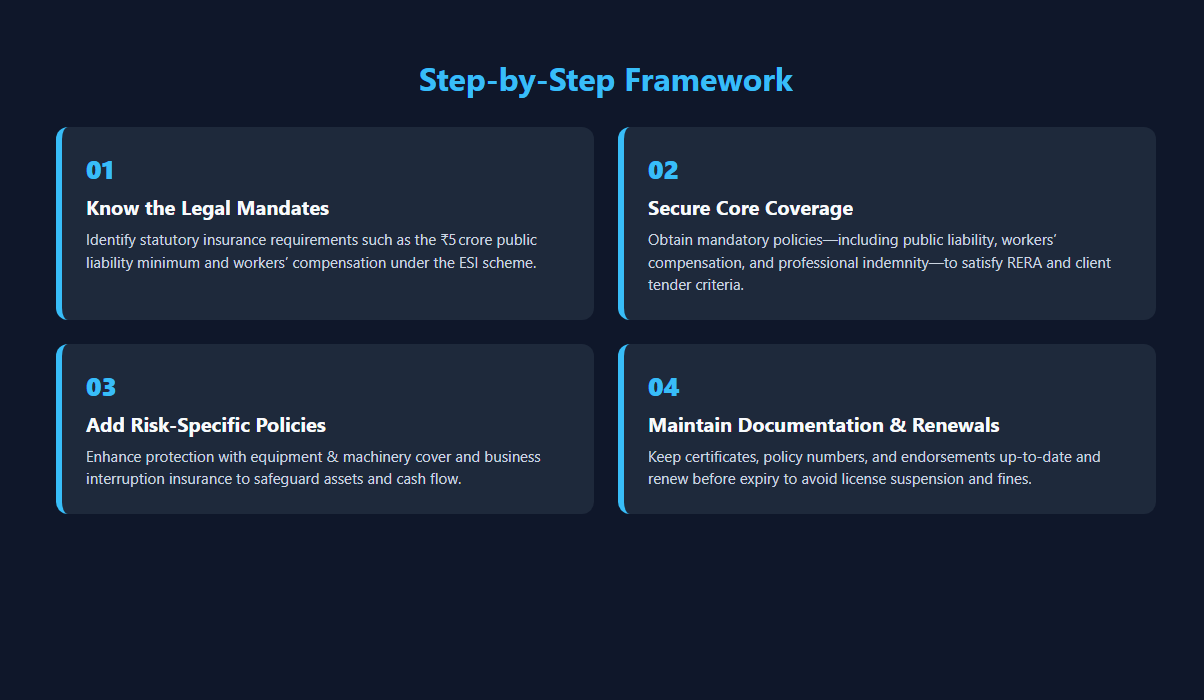
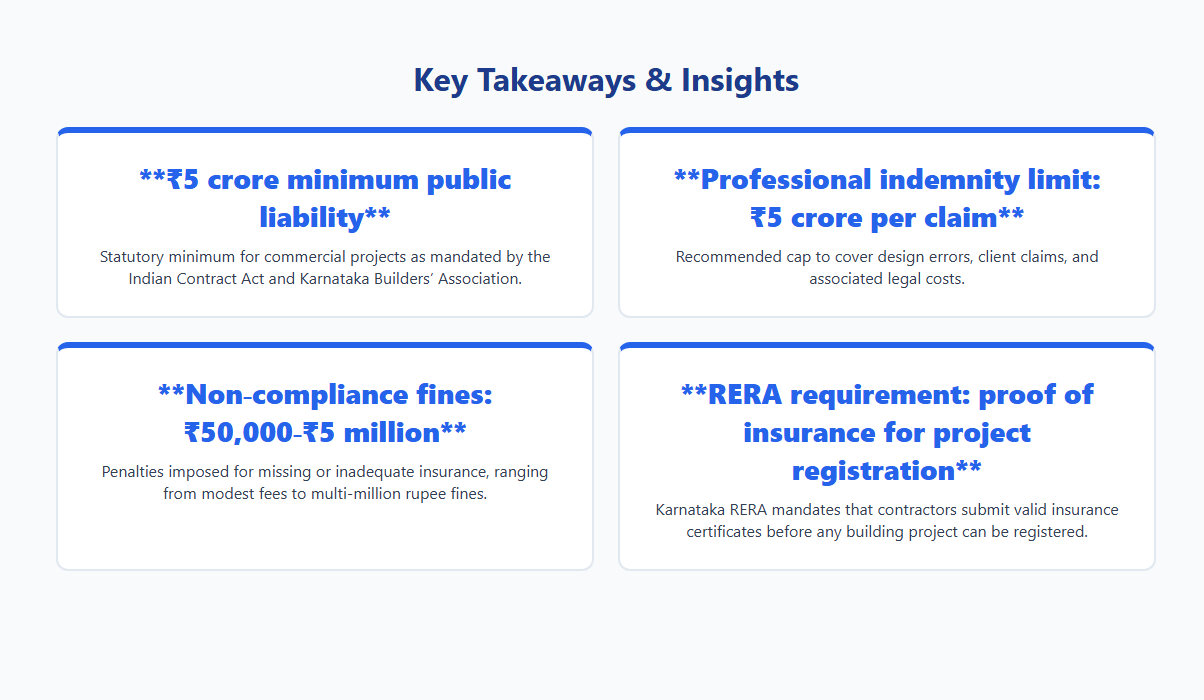
The Indian Contract Act and the Karnataka Builders’ Association both mandate a minimum of ₹5 crore in public liability insurance for any contractor undertaking commercial projects. Additionally, workers’ compensation under the Employees’ State Insurance (ESI) scheme shields you from potential claims arising from on‑site injuries, while contractor’s all‑risk policies cover damage to equipment, materials, and third‑party property.
Beyond legal compliance, many clients in Bangalore now request proof of professional indemnity insurance, which protects against design errors, project delays, and cost overruns. Securing a comprehensive package not only satisfies tender requirements but also enhances credibility, helping you win larger contracts in the city’s booming infrastructure landscape, and positions you alongside reliable building contractors.
Ready to safeguard your business? Our guide breaks down each policy, premium considerations, and steps to obtain the right coverage quickly. Stay compliant, stay confident, and build with peace of mind.
Recommended Additional Coverage
Professional Indemnity
Professional indemnity insurance protects a Bangalore building contractor from claims arising out of alleged errors, omissions, or negligence in the design, planning, or execution of a project. Even when a contractor follows industry standards, a client may allege financial loss due to design flaws or misadvised specifications. This coverage typically includes legal defence costs, settlements, and any court‑ordered damages, ensuring that a single claim does not jeopardise the business’s cash flow or reputation. Contractors should verify that the policy limits align with the scale of their projects and that the coverage extends to subcontractors and consultants.
- Minimum recommended limit: INR 5 crore per claim.
- Covers legal fees, settlements, and court awards.
- Includes protection for design consultants and third‑party experts.
- Often required by municipal authorities for high‑value contracts.
Equipment and Machinery Cover
Construction sites rely on a wide array of expensive equipment—from tower cranes to concrete mixers. Equipment and machinery cover safeguards against loss or damage caused by accidents, theft, fire, or natural disasters. The policy can be tailored to protect owned assets, rented machinery, and even tools used by subcontractors. By insuring these assets, contractors avoid costly downtime, maintain project schedules, and reduce the financial impact of unexpected breakdowns.
- Insures both owned and hired equipment.
- Provides coverage for accidental damage, theft, and natural hazards.
- Optional extensions for transit and off‑site storage.
- Facilitates quicker claim settlement to minimise project delays.
Business Interruption Insurance
When a covered event halts construction—such as a fire, flood, or a prolonged strike—business interruption insurance compensates for lost revenue and ongoing expenses. It covers fixed costs like salaries, rent, and loan repayments, helping the contractor stay afloat while the site is restored. This coverage is especially vital for contractors with tight cash‑flow margins, as it prevents a temporary shutdown from evolving into a long‑term financial crisis.
- Covers loss of income and operating expenses during downtime.
- Includes costs for temporary relocation or alternative site setup.
- Policy limits should reflect the contractor’s average monthly turnover.
- Often bundled with property insurance for streamlined administration.
Legal Compliance and Penalties
Regulatory bodies and statutes
In Bangalore, building contractors must align their insurance coverage with a layered framework of national and state regulations. The Insurance Regulatory and Development Authority of India (IRDAI) sets the minimum standards for policy content, while the Karnataka Real Estate Regulatory Authority (RERA) mandates proof of contractor insurance before any project registration. The Building and Other Construction Workers (Regulation of Employment and Conditions of Service) Act, 1996, requires contractors to carry workers’ compensation and injury policies. Additionally, the Karnataka Municipal Corporations Act and the Karnataka Factories Act impose specific liability limits for public‑safety and structural risk.
- IRDAI – policy wording and solvency norms
- Karnataka RERA – mandatory insurance for project licensing
- Building and Other Construction Workers Act – workers’ compensation
- Karnataka Municipal Corporations Act – public‑liability coverage
- Karnataka Factories Act – structural risk and fire insurance
Consequences of non‑compliance
Failure to meet the prescribed insurance requirements can trigger severe administrative and financial repercussions. Authorities may suspend or revoke the contractor’s registration, halt ongoing construction, and impose monetary fines that scale with the project’s value. Courts can also order restitution to injured parties, and insurers may deny claims if policies are found inadequate. Repeated violations often lead to black‑listing on state procurement portals, effectively barring the contractor from future public contracts.
- License suspension or cancellation
- Project stoppage orders from municipal bodies
- Fines ranging from ₹50,000 to ₹5 million
- Legal liability for uncovered injuries or damages
- Exclusion from government tenders and RERA‑registered projects
Documentation and renewal timelines
Contractors must maintain an up‑to‑date portfolio of insurance certificates, policy numbers, and endorsement letters for each active project. The original certificates should be submitted to the local RERA office at the time of project registration and displayed at the construction site. Renewal of policies must occur at least 30 days before expiry to avoid coverage gaps, and a refreshed certificate must be re‑filed with the municipal authority within 15 days of renewal.
- Original insurance certificate and policy number
- Endorsement letters for any policy modifications
- Renewal notice issued ≥30 days before expiry
- Updated certificate filed with RERA within 15 days of renewal
- Record of all claim settlements for audit purposes
Choosing the Right Insurer
Assessing insurer reputation
For a Bangalore building contractor, the insurer’s track record is as important as the coverage itself. A strong reputation signals financial stability, prompt claim settlement, and familiarity with local construction risks. Review the insurer’s credit ratings from agencies such as CRISIL or ICRA, and check the duration of their presence in the Indian market. Seek feedback from peer contractors, industry associations, and online forums to gauge real‑world experiences. A reputable insurer will also maintain a dedicated claims desk for construction projects, reducing bureaucratic delays during critical phases.
- Check regulatory compliance with IRDAI licensing.
- Verify the insurer’s loss‑ratio and claim‑settlement speed.
- Look for industry awards or recognitions specific to construction insurance.
Evaluating policy terms
Policy language often hides exclusions that can leave a contractor exposed. Scrutinize the scope of coverage for site‑specific hazards such as monsoon flooding, labor strikes, and equipment theft. Ensure the policy includes “all‑risk” clauses for structural damage, third‑party liability, and professional indemnity where applicable. Pay attention to policy limits, sub‑limits for high‑value items, and any mandatory endorsements required by Bangalore municipal regulations.
- Identify any geographic or project‑type exclusions.
- Confirm the duration aligns with the construction schedule.
- Clarify renewal conditions and notice periods.
Negotiating premiums and deductibles
Premiums in Bangalore can fluctuate based on project size, location, and past loss history. Use a detailed risk assessment to argue for lower rates, highlighting safety certifications, experienced supervision, and robust loss‑prevention programs. When negotiating, balance premium savings against deductible levels; a higher deductible reduces premium but can strain cash flow if a claim arises. Request multi‑year discounts or bundled packages that combine contractor’s all‑risk, workers’ compensation, and equipment insurance.
- Ask for a premium break‑down by risk class.
- Negotiate flexible deductible options tied to claim frequency.
- Seek clauses that allow premium adjustments after major project milestones.
Cost Factors and Budgeting for Insurance
Factors influencing premium rates
Insurance premiums for building contractors in Bangalore are shaped by a blend of risk‑related and operational variables. Insurers assess the size and complexity of projects, the historical loss record of the contractor, and the specific types of coverage required (e.g., public liability, workers’ compensation, contractor’s all‑risk). Geographic considerations such as flood‑prone zones or high‑traffic urban sites also affect rates. Additionally, the financial strength of the contractor, the presence of safety certifications, and the use of subcontractors can either increase or lower the premium calculations.
- Project scale and value – larger contracts typically attract higher premiums.
- Claims history – a clean loss‑run reduces risk perception.
- Safety standards – ISO 45001 or similar certifications can earn discounts.
- Location risk – proximity to construction hotspots or natural hazards influences pricing.
- Coverage breadth – bundling multiple policies often yields a lower combined rate.
Typical cost ranges for Bangalore contractors
Based on recent market data, Bangalore contractors can expect the following annual premium brackets, depending on the scope of work and coverage depth:
- Small‑scale residential projects (₹1–₹5 crore): ₹30,000 – ₹80,000.
- Mid‑size commercial builds (₹5–₹20 crore): ₹1 lac – ₹3 lacs.
- Large infrastructure or high‑rise developments (₹20 crore+): ₹5 lacs – ₹12 lacs.
These figures are indicative; actual costs may vary with insurer underwriting criteria and any optional endorsements added to the base policy.
Tips to reduce insurance expenses
Strategic planning can help contractors keep insurance outlays manageable without compromising protection:
- Maintain a robust safety program and document zero‑incident periods to negotiate lower rates.
- Consolidate policies with a single insurer to benefit from multi‑policy discounts.
- Review and adjust coverage limits annually, ensuring they match the current project portfolio.
- Invest in risk‑mitigation technologies such as site surveillance and real‑time hazard monitoring.
- Engage a professional broker familiar with Bangalore’s construction landscape to compare quotes and identify hidden savings.
Claims Process and Best Practices
Steps to file a claim
When a construction incident occurs, following a structured claim filing process can significantly reduce delays and disputes. Begin by promptly notifying your insurer within the policy‑specified timeframe, typically 24‑48 hours. Gather all relevant documentation, such as incident reports, photographs, and witness statements, and submit a detailed claim form. After submission, cooperate with the insurer’s adjuster by providing site access and additional evidence as requested. Finally, review the adjuster’s report, negotiate any disputed amounts, and sign the settlement agreement to close the claim.
- Immediate notification to insurer (within 24‑48 hours)
- Complete claim form with accurate incident details
- Attach supporting documents: photos, logs, contracts
- Facilitate adjuster’s site inspection and information requests
- Review, negotiate, and finalize the settlement
Common pitfalls to avoid
Even seasoned contractors can stumble over avoidable mistakes that jeopardize claim outcomes. One frequent error is failing to document the incident in real time, leading to vague or incomplete evidence. Overlooking policy exclusions—such as work performed without proper permits—can result in denied coverage. Additionally, delaying the claim or providing inconsistent information may trigger investigations that prolong settlement. Lastly, attempting to settle without a thorough review of the adjuster’s findings can leave money on the table.
- Neglecting real‑time documentation of damage and causes
- Ignoring policy exclusions or contractual obligations
- Delaying notification or submission of claim materials
- Providing inconsistent or incomplete information to the insurer
- Accepting settlement offers without independent verification
Maintaining records for smooth settlement
Robust record‑keeping is the backbone of a seamless claims experience. Implement a centralized digital repository for all project documents, including contracts, change orders, safety logs, and subcontractor agreements. Regularly update daily site diaries with weather conditions, workforce levels, and material deliveries. Store photographs and video footage chronologically, tagging each file with the date, location, and description of the observed condition. Finally, retain copies of all correspondence with insurers, adjusters, and legal counsel to ensure traceability throughout the claim lifecycle.
- Use a cloud‑based system for centralized document storage
- Maintain daily site diaries with detailed observations
- Chronologically tag photos and videos with contextual metadata
- Archive all insurer and adjuster communications
- Conduct periodic audits to verify completeness of records