


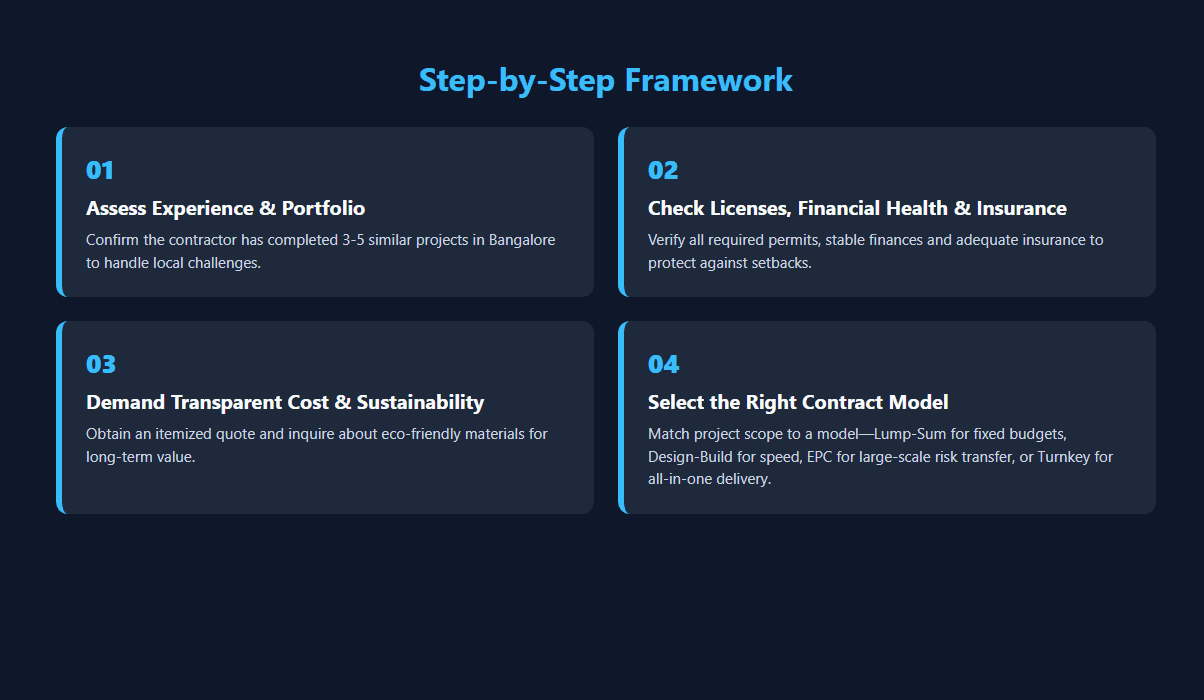
Choosing the right building contractor in Bangalore can feel like navigating a bustling market of options, each promising quality and speed. Understanding how to select building contractor model Bangalore begins with recognizing the city’s unique construction landscape—where rapid urban growth meets strict municipal regulations. A reputable contractor will hold all necessary licenses, have a proven track record of delivering projects on time, and possess a portfolio that reflects both modern design sensibilities and adherence to local building codes.
Start by evaluating experience: contractors who have successfully completed at least three to five similar projects in the area are better equipped to handle site-specific challenges, such as monsoon‑related delays or soil stability issues. Verify their financial stability and insurance coverage, as these factors protect you from unexpected setbacks. Additionally, seek client testimonials and ask for references to gauge reliability, communication style, and post‑completion support.
Transparency in cost estimation is another crucial factor—an itemized quote lets you compare offers objectively and avoid hidden fees. When you choose the right contractor, also consider their approach to sustainability; many Bangalore projects now incorporate eco‑friendly materials and energy‑efficient designs, adding long‑term value to your investment.
Understanding Contractor Selection Models
Traditional Lump‑Sum Contract
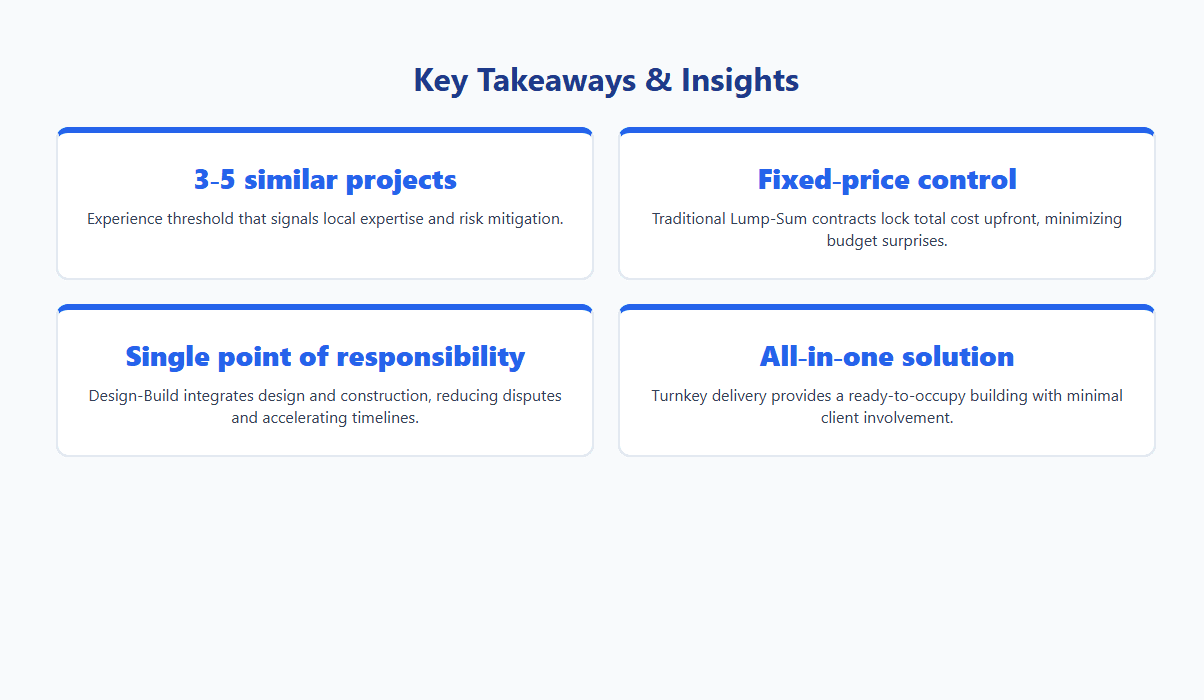
This model is the most common in Bangalore’s residential and commercial projects. The client receives a fixed price quote based on detailed drawings, and the contractor assumes the risk of cost overruns. It works best when the scope is clearly defined and changes are minimal.
- Clear budget control – the total cost is known upfront.
- Limited flexibility – any design change typically triggers a formal variation order.
- Contractor‑driven schedule – the builder manages the timeline to meet the agreed price.
Design‑Build Integrated Approach
In a design‑build setup, a single entity handles both design and construction, streamlining communication and reducing conflicts. This model is gaining traction in Bangalore’s fast‑track developments where speed and coordination are critical.
- Single point of responsibility – reduces disputes between architect and contractor.
- Accelerated delivery – design and construction phases can overlap.
- Enhanced innovation – early contractor involvement encourages value engineering.
Engineering‑Procurement‑Construction (EPC) Model
The EPC model is prevalent in large‑scale infrastructure and industrial projects. The contractor delivers a turnkey solution, covering engineering design, procurement of materials, and construction, often with performance guarantees.
- Risk transfer – the contractor bears design, procurement, and construction risks.
- Performance‑based payments – milestones are tied to measurable outputs.
- Comprehensive warranties – often include post‑completion maintenance.
Turnkey Delivery System
Turnkey contracts are similar to EPC but are more common in residential complexes and mixed‑use developments in Bangalore. The client receives a fully operational building, ready for occupancy, with minimal involvement in day‑to‑day project decisions.
- All‑in‑one solution – design, construction, and commissioning are bundled.
- Predictable handover – the client takes possession once the project meets predefined criteria.
- Reduced administrative burden – the client deals with a single contract and payment schedule.
When to Choose a Traditional Lump‑Sum Contractor
Clear scope and fixed budget
In Bangalore’s fast‑moving market, a well‑defined project brief and a firm budget are essential for cost control. A lump‑sum contract locks the total price at the outset, removing the risk of unexpected variations. This model works best when the client can articulate every material, finish, and milestone before work begins, allowing the contractor to price the work accurately.
- All drawings and specifications are finalized.
- Contingency funds are minimized.
- Price negotiations conclude before construction starts.
Simple residential projects
For single‑family homes, townhouses, or modest apartments, the design is usually straightforward and the client’s expectations are clear. The limited complexity means fewer change orders, making the lump‑sum approach both economical and administratively light.
- Standard layouts and common material palettes.
- Minimal custom features or specialty systems.
- Predictable timelines that align with a fixed price.
Low design‑construction overlap
When the design phase is completed independently of construction, there is little need for iterative coordination. A lump‑sum contract suits projects where architects deliver a sealed set of documents and the contractor proceeds without ongoing design input, reducing the chance of scope creep.
- Design documents are issued before the tender.
- Contractor assumes responsibility for execution only.
- Changes require formal variation orders.
Ease of legal documentation
Legal frameworks in Karnataka favor contracts with clear, unambiguous terms. A lump‑sum agreement provides a single, comprehensive document that outlines price, deliverables, and penalties, simplifying dispute resolution and compliance with local building regulations.
- One‑page price clause eliminates ambiguity.
- Standardized clauses for liquidated damages.
- Streamlined approval process with municipal authorities.
Benefits of the Design‑Build Model in Bangalore
Design‑build has emerged as a preferred delivery method in Bangalore’s fast‑growing real‑estate market, where land scarcity and regulatory timelines demand efficiency. By merging design expertise with construction execution, the model aligns stakeholder interests and reduces the friction that often plagues traditional procurement.
Single point of responsibility
In a design‑build contract the owner deals with one entity that handles both design and construction. A 2023 survey by the Bangalore Construction Association found that 71% of project owners preferred this arrangement because it eliminates the ambiguity of multiple contracts, streamlines decision‑making, and places legal and financial accountability on a single party.
Faster project timelines
The integrated nature of design‑build allows parallel processing of design and site preparation. Research from the Indian Institute of Technology Bangalore shows that design‑build projects in the city are completed on average 20‑25% quicker than traditional design‑bid‑build projects, translating into earlier occupancy and reduced financing costs.
- Concurrent design and permitting reduces idle periods.
- Early contractor involvement accelerates material procurement.
- Reduced hand‑over time between design and construction teams.
Enhanced collaboration between architects and builders
Because architects and builders work under the same contractual umbrella, communication barriers are lowered. A recent case study of a mixed‑use development in Whitefield highlighted how weekly joint workshops resolved design conflicts on the spot, cutting rework by 30% and improving overall design quality.
Reduced change‑order risks
Change orders are a major cost driver in conventional projects. In design‑build, the contractor participates from the conceptual stage, forecasting constructability issues early. Data from the Bangalore Real Estate Forum indicates that design‑build projects experience 40% fewer change orders, leading to more predictable budgets and fewer schedule overruns.
For developers seeking certainty and speed, the design‑build model offers a compelling blend of accountability, collaboration, and cost control. Evaluating contractors on their integrated capabilities and track record in Bangalore will ensure the chosen partner can fully leverage these advantages.
Why EPC Might Be Right for Large‑Scale Developments
Complex infrastructure requirements
Large‑scale projects in Bangalore often involve multi‑layered utilities, high‑rise structures, and integration with city‑wide transport corridors. An EPC (Engineering, Procurement, and Construction) model consolidates design, material sourcing, and build execution under a single contract, reducing the coordination overhead that typically plagues fragmented approaches. By aligning engineering specifications directly with procurement schedules, the contractor can pre‑empt clashes between structural systems and municipal services, ensuring that complex infrastructure requirements are met on time and within budget.
- Unified design documents eliminate duplicated effort.
- Integrated scheduling synchronises civil, mechanical, and electrical works.
- Single point of contact streamlines approvals from local authorities.
Need for specialized engineering expertise
Bangalore’s rapid urbanisation demands cutting‑edge solutions such as seismic‑resilient frames, green building certifications, and smart‑city IoT integration. EPC firms typically house multidisciplinary teams—structural, geotechnical, electrical, and environmental engineers—who collaborate from concept to completion. This depth of expertise allows the contractor to embed advanced analysis tools, optimise material usage, and propose innovative construction methods that a general contractor might overlook.
- Access to in‑house specialists reduces reliance on external consultants.
- Advanced simulation reduces design revisions.
- Proactive sustainability planning aligns with regulatory incentives.
Streamlined procurement and construction phases
When engineering, procurement, and construction are bundled, material orders are triggered by finalized design data, not by interim drawings. This eliminates the lag between design approval and material delivery that often stalls traditional projects. The EPC contractor can negotiate bulk purchases, secure long‑lead items early, and sequence construction activities to minimise idle time on site, delivering a smoother, faster project lifecycle.
- Early procurement locks in prices against market volatility.
- Just‑in‑time delivery aligns with critical path milestones.
- Coordinated construction sequencing cuts overall project duration.
Risk transfer to the EPC contractor
Under an EPC contract, the contractor assumes responsibility for design errors, cost overruns, and schedule delays, shifting these risks away from the developer. This risk allocation is reinforced by performance guarantees and liquidated damages clauses, providing the client with greater financial certainty. Consequently, developers can focus on strategic decisions and financing while the EPC partner manages day‑to‑day execution challenges.
- Fixed‑price contracts cap budget exposure.
- Clear liability definitions simplify dispute resolution.
- Performance incentives align contractor goals with project success.
Turnkey vs Integrated Design‑Build: Key Differences
Scope of deliverables
In a turnkey model the contractor assumes responsibility for the entire project lifecycle—from concept design to final hand‑over—delivering a ready‑to‑occupy structure. Integrated design‑build, however, splits responsibilities: the design team creates detailed drawings while the construction team executes them, allowing for more granular control over each phase.
- Turnkey: single contract, one point of accountability, complete package.
- Design‑build: separate design and construction contracts, shared risk.
- Typical Bangalore projects: turnkey often used for residential complexes; design‑build favoured for commercial campuses.
Owner’s involvement during construction
Turnkey contracts limit the owner’s day‑to‑day interaction; decisions are funneled through the contractor, reducing the need for constant supervision. Integrated design‑build encourages the owner to engage with both designers and builders, enabling real‑time adjustments and a clearer view of progress.
- Turnkey: owner reviews milestones only.
- Design‑build: owner participates in design reviews, material selections, and on‑site inspections.
- Result: higher owner satisfaction when flexibility is required.
Cost predictability
Turnkey projects usually present a fixed‑price quote after the design is finalised, which enhances budgeting certainty. In design‑build, costs may evolve as design refinements occur, but early collaboration often uncovers value‑engineering opportunities that can offset price fluctuations.
- Turnkey: fixed price, limited change orders.
- Design‑build: provisional sum, cost‑plus or target‑price structures.
- Research shows Bangalore’s high‑rise market sees a 5‑10% cost variance in design‑build versus 2‑4% in turnkey.
Post‑handover support and warranties
Turnkey contractors typically provide a comprehensive warranty covering all systems, as they built the project end‑to‑end. Integrated design‑build may involve multiple warranties—one from the designer for design integrity and another from the builder for construction quality—requiring the owner to coordinate claims.
- Turnkey: single warranty period, streamlined claim process.
- Design‑build: layered warranties, potential for overlapping coverage.
- Best practice: negotiate a unified warranty clause regardless of model.
Assessing Your Project’s Complexity and Risk Appetite
Choosing the appropriate contractor model in Bangalore hinges on a realistic appraisal of how large and financially demanding your project is, as well as how much uncertainty you are prepared to tolerate. Recent industry surveys indicate that mismatches between project scale and contractor type are a primary cause of cost overruns and schedule delays.
Project size and budget magnitude
Large‑scale developments (e.g., multi‑storey residential complexes) typically benefit from an EPC (Engineering, Procurement, Construction) or Design‑Build model, which consolidates responsibility and reduces coordination risk. Smaller, budget‑constrained renovations often thrive under a traditional Lump‑Sum contract, where the owner retains tighter cost control.
- Projects > ₹5 crore: consider integrated models to streamline risk.
- Projects ≤ ₹5 crore: a conventional contract can provide clearer cost visibility.
- High‑budget projects should allocate a contingency of 5‑10 % for unforeseen scope changes.
Site constraints and regulatory hurdles
Bangalore’s dense urban fabric introduces challenges such as limited access, heritage clearances, and fluctuating zoning rules. A Design‑Build approach can embed regulatory expertise early, while a Turnkey model may be preferable when the owner lacks the bandwidth to manage approvals.
- Restricted site access: prioritize contractors with proven local logistics plans.
- Complex permits: select firms experienced in municipal approvals.
- Environmental compliance: ensure the contractor’s risk‑mitigation plan aligns with Bangalore Development Authority (BDA) guidelines.
Owner’s technical knowledge
Owners with strong engineering backgrounds often opt for a Construction Management at Risk (CMAR) model, allowing them to influence technical decisions while delegating execution risk. Conversely, owners with limited technical insight should lean toward a Design‑Build or EPC model to leverage the contractor’s expertise.
- Technical expertise present: CMAR or joint‑venture structures.
- Technical expertise limited: Design‑Build or EPC for end‑to‑end delivery.
- Hybrid knowledge: consider a Managed Services contract with advisory support.
Desired level of control over design decisions
If maintaining creative authority over architectural aesthetics is paramount, a traditional Design‑Bid‑Build contract preserves the owner’s decision‑making power. When speed and cost certainty outweigh design autonomy, a Design‑Build contract grants the contractor greater leeway to optimize solutions.
- High control: Design‑Bid‑Build with detailed specifications.
- Balanced control: CMAR with collaborative design workshops.
- Low control: Design‑Build or EPC for rapid, cost‑predictable outcomes.
Legal, Regulatory & Financial Checks Before Signing
Verify Bangalore municipal approvals and permits
Before any ground‑breaking activity, ensure the contractor has secured all mandatory clearances from the Bruhat Bengaluru Mahanagara Palike (BBMP) and other relevant bodies. Missing permits can halt construction, attract penalties, and jeopardise your investment.
- Building plan approval from BBMP or the respective zone office.
- Occupancy Certificate (OC) and Completion Certificate (CC) readiness.
- Environmental clearances, especially for projects near lakes or green zones.
- Road‑width and encroachment permissions if the site lies adjacent to public pathways.
Review contractor’s licensing and RERA registration
Only contractors who hold a valid trade license and are registered under the Real Estate (Regulation and Development) Act, 2016 (RERA) can legally undertake residential projects in Karnataka. This registration provides a transparent track record and ensures adherence to statutory quality standards.
- Check the contractor’s trade license number on the BBMP portal.
- Confirm RERA registration on the Karnataka RERA website; note the registration number and validity period.
- Verify that the contractor’s RERA profile lists the exact type of work (e.g., residential, commercial) you require.
- Look for any past complaints or penalties recorded against the contractor.
Assess financial stability and insurance coverage
A contractor’s financial health directly impacts project timelines and quality. Conduct a thorough review of their balance sheets, bank statements, and credit ratings. Additionally, ensure they carry comprehensive insurance to protect against unforeseen risks.
- Obtain audited financial statements for the last three years.
- Check for a performance bond or bank guarantee covering at least 10% of the contract value.
- Confirm possession of civil liability insurance and workers’ compensation coverage.
- Ask for references from recent clients to gauge cash‑flow reliability.
Include clear dispute‑resolution clauses
Even with diligent vetting, disagreements may arise. Embedding explicit dispute‑resolution mechanisms in the contract can save time, money, and relationships.
- Specify a tiered approach: negotiation, mediation, then arbitration.
- Identify the arbitration institution (e.g., Indian Council of Arbitration) and the governing law (Karnataka State Law).
- Set reasonable timelines for each dispute‑resolution stage.
- Include a clause for liquidated damages in case of project delays or quality breaches.