


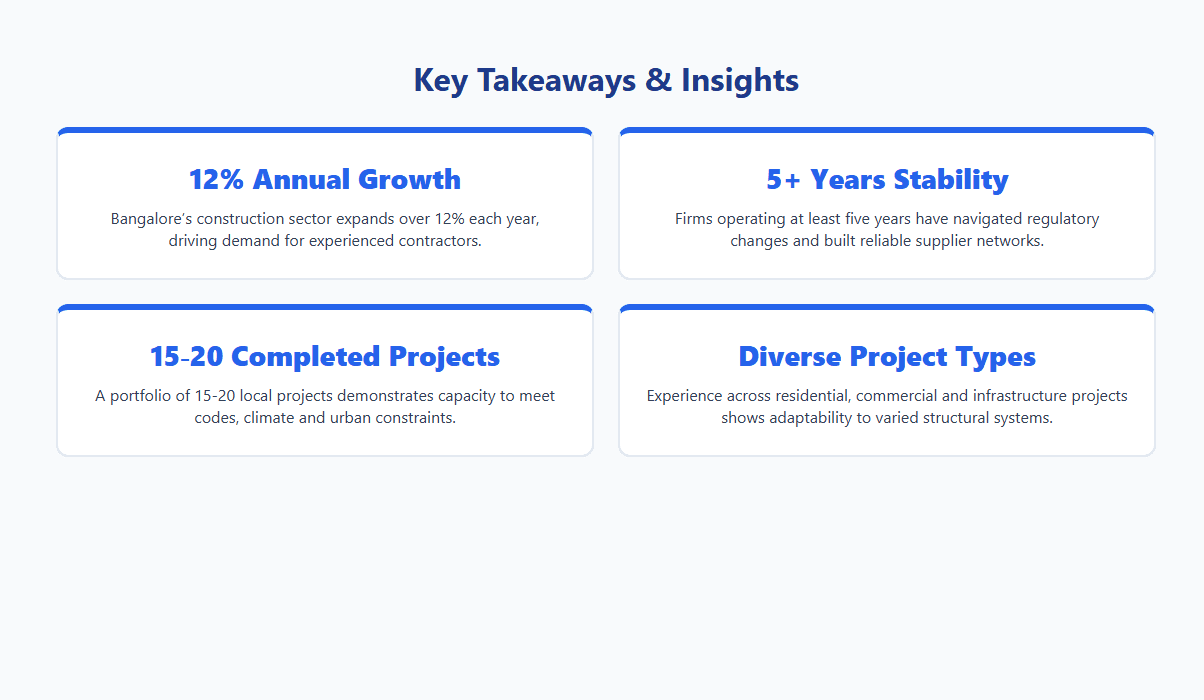
When you’re planning a new home or commercial space in the city that never stops growing, the first question on every developer’s mind is how to evaluate building contractor experience Bangalore offers. The city’s construction sector has surged by over 12% annually, driven by tech‑driven demand and rapid urbanization. This boom makes it essential to sift through countless firms and pinpoint those with a proven track record, valid licenses, and a portfolio that matches your project’s scale.
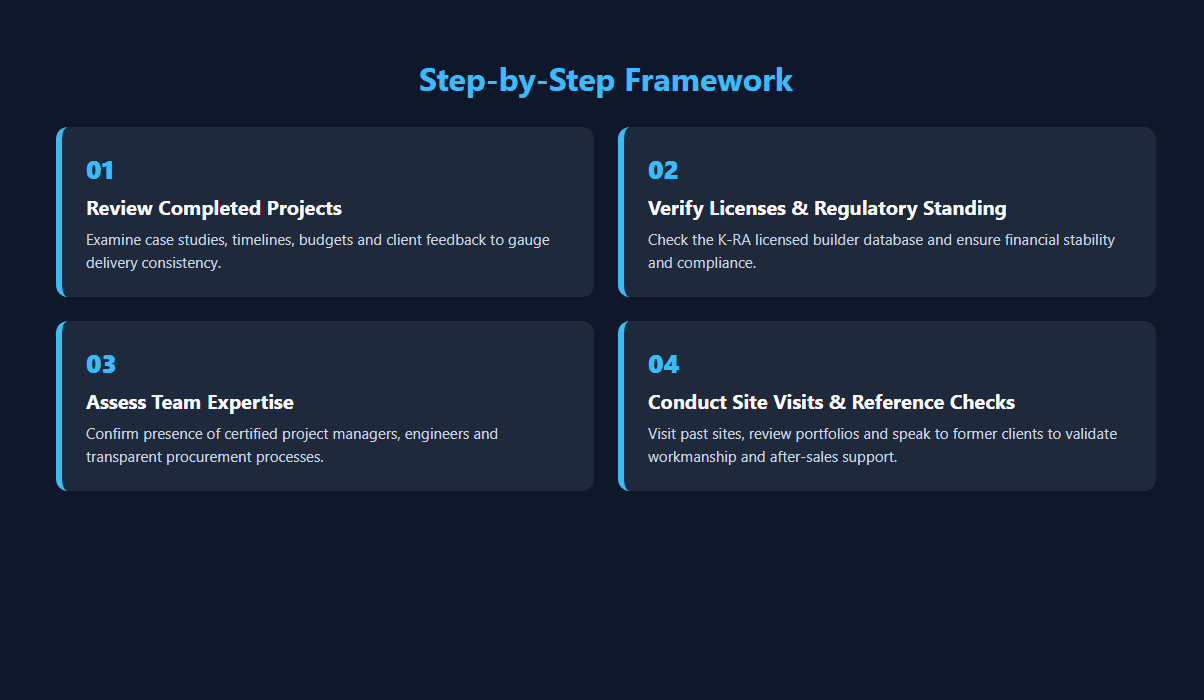
Start by reviewing completed projects: reputable contractors showcase detailed case studies, including timelines, budgets, and client feedback. In Bangalore, the Karnataka Real Estate Regulatory Authority (K-RA) maintains a public database of licensed builders—checking this list can verify compliance and financial stability. Additionally, ask for references from recent clients; a contractor who consistently delivers on time and within budget is a reliable partner.
Finally, assess the team’s expertise. Skilled project managers, certified engineers, and a transparent procurement process are hallmarks of professionalism. By combining these data points—past performance, regulatory standing, and team qualifications—you’ll choose the right contractor and safeguard your investment, ensuring your construction vision becomes a reality.
Understanding Contractor Experience Metrics
Years in Business
In Bangalore’s fast‑growing construction market, the length of time a contractor has operated is a primary indicator of stability and adaptability. A firm that has survived at least five years has typically navigated regulatory changes, fluctuating material costs, and seasonal labor variations, demonstrating resilience. Moreover, longer tenure often correlates with a deeper network of reliable suppliers and subcontractors, which can translate into smoother project execution and fewer delays.
- 5‑10 years: Established processes and a track record of consistent delivery.
- 10‑20 years: Proven ability to manage larger, more complex developments.
- 20+ years: Strategic expertise, strong brand reputation, and extensive stakeholder relationships.
Number of Completed Projects
The sheer volume of finished projects offers quantitative proof of a contractor’s capacity to handle diverse workloads. Reviewing a portfolio of at least 15–20 completed assignments in the Bangalore region helps verify that the contractor can meet local building codes, climate considerations, and urban planning constraints. High project counts also suggest refined project management tools and a seasoned workforce.
- 15–30 projects: Demonstrates steady demand and reliable performance.
- 30–50 projects: Indicates scalability and the ability to juggle multiple sites.
- 50+ projects: Reflects a mature operation with robust quality‑control mechanisms.
Project Types and Scale
Evaluating the variety and magnitude of past work reveals a contractor’s versatility. In Bangalore, projects range from compact residential apartments to sprawling commercial complexes and mixed‑use developments. Contractors who have executed both high‑rise towers and low‑rise housing schemes show adaptability to different structural systems, material specifications, and stakeholder expectations.
- Residential (single‑family, multi‑unit): Insight into livability standards and interior finish quality.
- Commercial (office blocks, retail malls): Experience with larger floor plates, advanced MEP integration, and tighter timelines.
- Infrastructure (roads, utilities): Demonstrates capability to coordinate with municipal bodies and manage public‑sector requirements.
Verifying Past Projects and Client References
Site visits
Walking through completed or ongoing sites gives you a tangible sense of a contractor’s workmanship, safety standards, and attention to detail. In Bangalore’s diverse climate, observe how the contractor handles moisture control, material storage, and site organization. Take note of finishing quality, structural alignment, and any post‑completion issues that may have been addressed on‑site. Photographic documentation and a checklist of observations will help you compare multiple contractors objectively.
- Inspect structural elements such as foundations, columns, and load‑bearing walls.
- Check finishing work – plaster, tiling, paint, and fixtures – for consistency.
- Assess site cleanliness, safety signage, and compliance with local regulations.
Portfolio review
A well‑curated portfolio showcases the breadth of a contractor’s experience, from residential apartments to commercial complexes. Request high‑resolution images, project timelines, and budget summaries for at least three recent works in Bangalore. Pay special attention to projects that match the scale and design language of your own plan. A detailed portfolio also reveals the contractor’s ability to collaborate with architects, engineers, and suppliers throughout the construction cycle.
- Identify projects with similar square footage, material specifications, and design aesthetics.
- Look for evidence of sustainable practices, such as rainwater harvesting or energy‑efficient lighting.
- Verify that the portfolio includes before‑and‑after photos to illustrate problem‑solving capabilities.
Reference calls and testimonials
Speaking directly with former clients provides insight that brochures cannot. Prepare a set of targeted questions about schedule adherence, cost transparency, communication style, and after‑sales support. Genuine testimonials often include specific anecdotes about challenges faced and how the contractor resolved them. Record these conversations, when possible, to build a reliable reference database for future projects.
- Ask about any unexpected cost overruns and how they were managed.
- Inquire about the contractor’s responsiveness to change orders or design modifications.
- Seek feedback on post‑completion warranty service and defect rectification.
Assessing Technical Expertise and Certifications
Relevant Licenses
In Bangalore, a contractor must hold specific licenses issued by the Karnataka State Government and local municipal bodies. These licenses demonstrate compliance with statutory regulations, allowing the contractor to undertake residential, commercial, or infrastructure projects legally. When evaluating a contractor, verify the presence of a valid:
- Trade license from the Bruhat Bengaluru Mahanagara Palike (BBMP)
- Contractor registration under the Karnataka Contractors’ Association (KCA)
- Labour welfare registration, which ensures adherence to labor laws
Additionally, the contractor’s license history can reveal any past violations or suspensions, which are critical red flags for risk‑aware developers.
Specialized Training
Specialized training reflects a contractor’s commitment to staying current with evolving construction technologies and safety standards. Research indicates that firms that invest in continuous skill development achieve up to 15% higher project efficiency in Bangalore’s competitive market. Look for evidence of:
- Certified courses in green building practices (e.g., GRIHA, LEED)
- Advanced structural analysis workshops conducted by Indian Institutes of Technology (IIT)
- Safety management programs accredited by the National Safety Council of India
Such training also equips teams to handle Bangalore’s monsoon‑driven site challenges, ensuring timelines remain intact despite weather disruptions.
Quality Certifications (ISO, etc.)
International quality standards such as ISO 9001 provide a framework for systematic process control and customer satisfaction. Contractors with these certifications are audited regularly, ensuring consistent delivery. In Bangalore, a survey of top‑ranking firms showed that ISO‑certified contractors reduced rework by 20% on average. Key certifications to verify include:
- ISO 9001: Quality Management Systems
- ISO 14001: Environmental Management Systems
- ISO 45001: Occupational Health and Safety Management
These certifications also align with the city’s push for sustainable construction, making them essential for projects aiming for green building ratings.
Evaluating Financial Stability and Insurance
Financial statements
Before signing any contract, request the contractor’s audited financial statements for the past three years. These documents reveal revenue trends, profit‑margin, and debt levels, allowing you to gauge whether the firm can sustain cash‑flow demands of a large project in Bangalore’s competitive market. Pay particular attention to the balance sheet, profit‑and‑loss statement, and cash‑flow statement, as they collectively illustrate liquidity, solvency, and operational efficiency.
- Balance sheet – assets vs. liabilities.
- Profit & loss – net earnings and margin stability.
- Cash‑flow statement – ability to meet short‑term obligations.
Bonding capacity
A contractor’s bonding capacity reflects the maximum amount a surety will guarantee on their behalf. High bonding capacity indicates strong creditworthiness and the ability to secure performance and payment bonds, which protect you from delays or non‑payment. Verify the current bonding limit, any active bonds on existing projects, and the history of bond claims to ensure the contractor can back the financial guarantees required for your construction scope.
- Bid bond – assurance of contract award compliance.
- Performance bond – guarantees project completion per specifications.
- Payment bond – protects subcontractors and suppliers.
Liability and workers’ comp coverage
Robust insurance coverage shields both the client and the contractor from unexpected losses. Confirm that the contractor maintains general liability insurance with limits of at least INR 10 crore and workers’ compensation that complies with Karnataka’s statutory requirements. Request a Certificate of Insurance and verify the policy’s effective dates, exclusions, and any additional insured endorsements that name the project owner.
- General liability – property damage and third‑party injury.
- Workers’ compensation – employee injury and medical costs.
- Certificates of insurance – proof of active coverage.
Analyzing Reputation Through Online and Industry Sources
Online reviews and ratings
In Bangalore’s competitive construction market, prospective clients rely heavily on digital feedback to gauge a contractor’s reliability. Aggregated scores on platforms such as Google My Business, Justdial, and UrbanClap provide a quick snapshot of overall performance, while detailed comments reveal recurring strengths or red flags. Pay particular attention to the consistency of high ratings over time; a sudden spike may indicate incentivized reviews rather than genuine client satisfaction.
- Google My Business – overall star rating, number of reviews, and response rate.
- Justdial – customer satisfaction index and complaint resolution statistics.
- UrbanClap – project‑specific feedback and post‑completion ratings.
- Social media groups – real‑time discussions on Facebook and LinkedIn for anecdotal evidence.
Industry awards
Award recognitions from reputable bodies serve as third‑party validation of a contractor’s technical competence and project management excellence. While not every skilled contractor pursues accolades, those that have earned regional or national honors often demonstrate a commitment to quality standards, safety protocols, and innovative construction practices.
- Construction World Awards – Best Residential Contractor (Bangalore Region).
- India Construction Excellence Awards – Sustainable Building Initiative.
- National Real Estate Development Awards – Outstanding Project Delivery.
- Architectural Digest India – Top Builder of the Year.
Professional association memberships
Membership in recognized industry associations signals adherence to ethical codes, continuous professional development, and access to a network of peers. Contractors who belong to these bodies are more likely to stay updated on evolving regulations, safety norms, and emerging construction technologies.
- Indian Institute of Builders (IIB) – Certified Builder Membership.
- Confederation of Real Estate Developers’ Associations of India (CREDAI) – Bangalore Chapter.
- National Association of Builders (NAB) – Gold Member Status.
- Society of Indian Architects (SIA) – Affiliate Contractor.
Spotting Red Flags and Common Pitfalls
When selecting a building contractor in Bangalore, the first line of defence against costly delays or sub‑standard work is the ability to recognise warning signs early. The city’s rapid growth has attracted many firms, but not all operate with the same level of professionalism. By focusing on three common red flags—unrealistic bids, lack of written contracts, and poor communication history—homeowners can filter out opportunistic players and protect their investment.
Unrealistic bids
Contracts that appear significantly lower than market averages often conceal hidden costs. In many Bangalore case studies, contractors use low initial estimates to win business, then introduce change orders, material mark‑ups, or additional labor charges once the project is underway.
- Price gaps of more than 20 % compared with comparable projects should trigger a deeper review.
- Requests for large upfront payments without a detailed cost breakdown are a typical red flag.
- Bid documents that omit specifications for finishes, fixtures, or site preparation are incomplete and risky.
Lack of written contracts
A verbal agreement provides little protection in a jurisdiction where disputes are settled through documentation. Research from Bangalore’s construction regulatory board shows that projects without formal contracts experience a 35 % higher rate of litigation.
- Ensure the contract lists scope of work, timelines, payment milestones, and penalties for delays.
- Both parties should sign and retain copies; electronic signatures are acceptable under Indian law.
- Include clauses for dispute resolution, such as arbitration, to avoid protracted court cases.
Poor communication history
Consistent, transparent communication is a strong indicator of a contractor’s reliability. A review of past client feedback in Bangalore reveals that firms with delayed responses or vague updates are more likely to miss deadlines.
- Check references and ask about response times during the bidding phase.
- Document all interactions—emails, messages, meeting minutes—to create an audit trail.
- Prefer contractors who provide regular progress reports and clear channels for queries.
Making the Final Decision: Scoring and Comparison
After gathering quotes, checking references and visiting past projects, the next step is to translate qualitative impressions into a quantifiable framework. A weighted scoring matrix allows you to compare contractors on the same scale, highlighting strengths and exposing gaps that might otherwise be overlooked. The method also builds confidence among financiers, who can see a transparent, data‑driven selection process.
Weighted scoring matrix
Assign each evaluation criterion a weight that reflects its importance to your project—such as cost (25%), timeline adherence (20%), quality of workmanship (20%), safety record (15%), and post‑completion support (20%). Then rate every contractor on a 1‑5 scale for each criterion. Multiply the rating by the weight and sum the results to obtain a final score. A spreadsheet or simple app can automate the weighting and summation, reducing manual errors.
- Cost: 25 % – total project cost vs. market rates.
- Timeline adherence: 20 % – ability to meet milestones.
- Quality of workmanship: 20 % – finish, material selection, compliance.
- Safety record: 15 % – incident history and safety certifications.
- Post‑completion support: 20 % – warranty, maintenance, and responsiveness.
Shortlist vs. final selection
The matrix will usually produce a clear top‑three. Use this shortlist to conduct deeper due‑diligence: request detailed cash‑flow forecasts, verify insurance coverage, and arrange a final site walk‑through with the contractor’s foreman. Invite the architect and finance officer to validate the shortlist against project milestones. At this stage, you may also re‑evaluate any “soft” factors—communication style, cultural fit, and willingness to incorporate client feedback—that are not easily quantified.
Negotiating terms and guarantees
With the preferred contractor identified, shift focus to contract terms. Negotiate milestones tied to payment releases, liquidated‑damage clauses for delays, and performance bonds that protect against non‑completion. Secure explicit guarantees for key elements such as structural integrity, waterproofing, and material warranties, and ensure they are documented in a clear, enforceable schedule of rates. Add a mediation clause to resolve disputes quickly and cost‑effectively.