

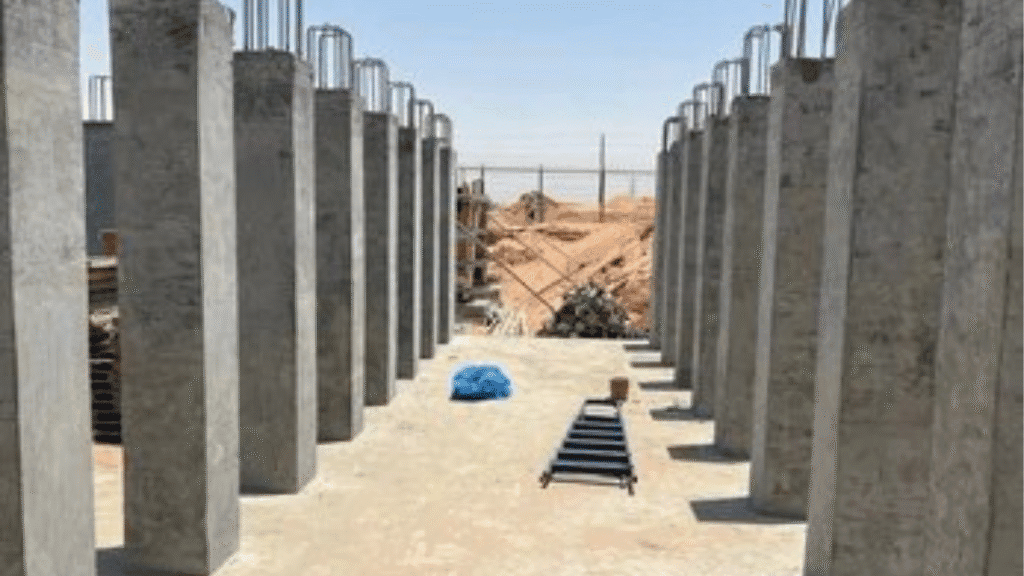
RCC construction is a term that comes up a lot when you want to build a robust, long-lasting home. But what does it really mean? How does it stack up against other building approaches, such as precast or prefabricated construction? And what makes it so popular in current architecture? Let’s look into the realm of RCC and find out what it is, what kinds there are, what its benefits are, and how it compares to other options.
What Does RCC Mean in Construction?
RCC is short for Reinforced Cement Concrete. It’s concrete that has been fortified with steel bars or meshes. Concrete is terrific at handling compression, but not so great at handling stress. Steel, on the other hand, is strong under tension. When put together, they make a material that can handle tremendous loads, vibrations, and even earthquakes.
So, What Is a House Made of RCC?
A house made of reinforced cement concrete for its structural parts, such as slabs, beams, columns, and foundations, is called an RCC house. This mix makes sure that RCC is stable and lasts a long time, which is why it is the backbone of modern construction.
What Does RCC House Mean and Why Is It Important?
When someone says “RCC house means,” they are talking about a building whose main load-bearing parts are built of reinforced concrete. RCC homes are different from regular brick-and-mortar homes in that they offer:
- Strength and durability for buildings with more than one floor
- Fire resistance, which makes things safer
- Design freedom, letting architects make open areas with fewer columns
In short, an RCC house is more than simply a construction; it’s a pledge that it will last.
Different Types of RCC and How They Are Grouped
RCC doesn’t work for everyone. There are several kinds of RCC, and each one is best for a certain purpose:
Concrete with Steel Reinforcement
The most frequent variety, where steel bars are put into concrete to manage tensile stress.
Concrete with Fiber Reinforcement
Instead of steel rods, it uses fibers like glass or synthetic materials. Great for overlays and pavements.
Concrete That Has Been Pre-Stressed
Before pouring concrete, steel tendons are pulled tight. This makes it great for bridges and other huge spans.
Polymer Concrete
Uses polymers instead of regular cement binders to make it more resistant to chemicals.
Engineers can utilize these categories to pick the best material for the work, whether it’s a small RCC house or a huge infrastructure project.
How to Build an RCC Building Step by Step
There are various steps to building an RCC structure:
- Planning and Design
Structural drawings are made to figure out where to put weights and reinforcements. - Getting Materials
Water, cement, aggregates, and steel bars are procured. - Work on Reinforcement
As planned, steel bars are cut, bent, and tied. - Setting Up the Formwork
Molds are made to shape beams, slabs, and columns. - Pouring Concrete
The combination is poured and shaken to get rid of air pockets. - Curing
Water is sprayed on for 7 to 28 days to make sure it is strong.
This method makes sure that your RCC building will last for many years.
What Is the Difference Between Precast and RCC?
Let’s discuss building with precast concrete and prefabricated concrete now. These methods use a factory to make concrete parts and then move them to the job site. So, precast construction is typically done off-site, while RCC is mostly done on-site.
Benefits of Precast Building
- Shorter project timelines
- Quality control that works well in factories
- Less disruption on site
Problems
- Costs of transportation
- Chance of damage during shipping
- Not much room for improvements on site
RCC construction, on the other hand, is:
- Cost-effective because just raw materials are moved
- Flexible, which means the design can change while it is being built
- Widely available, making it easier to recruit talented workers
If you’re interested in precast house construction in Bangalore, it’s becoming more popular for high-end projects where speed and accuracy are important. RCC is still the most popular choice for most homes since it is affordable and versatile.
Which One Should You Choose: FT or RCC?
You might have heard about FT vs RCC. FT usually means “fabricated” or “pre-engineered” structures, which are often composed of steel. These are easy to put together and light, but they don’t have the thermal mass or fire resistance of RCC. RCC is still the best choice for homes because it is strong, long-lasting, and cost-effective.
Why Use an RCC Construction Company?
When you hire a skilled RCC construction company, you can be confident that:
- Structural design is accurate
- Materials and workmanship are of high quality
- Safety standards are followed
If you’re looking for a trusted partner to build your dream home, check out Artscape, best home construction company in bangalore. They specialize in RCC and precast solutions, ensuring quality and timely delivery.
Benefits of RCC Homes
- Longevity: With little care, RCC houses can last between 50 and 100 years
- Earthquake Resistance: RCC constructions that are built correctly may handle seismic loads well
- Fire Safety: Concrete doesn’t burn, therefore it adds another layer of safety
- Freedom to Design: Big open spaces that don’t lose strength
Things to Keep in Mind That Are Bad
- Time-Consuming: It takes longer to build with RCC since it needs to cure
- Heavy Weight: Needs solid foundations to hold it up
- Problems with Cracking: If you don’t cure it properly, it can crack
The Future of RCC and Precast Building
Both RCC and precast processes are changing because of urbanization and technology. More and more people are using hybrid methods, which blend precast parts with RCC, to build structures that are both robust and quick.
Last Words
You can choose between an RCC house and a precast house, but your choice will rely on your budget, timeframe, and design choices. Most homeowners still choose RCC because it is strong and can be used in many ways. Precast and prefabricated alternatives are great for projects that need to be done quickly and accurately.
Now you know that RCC is more than just concrete; it’s the base of modern architecture.